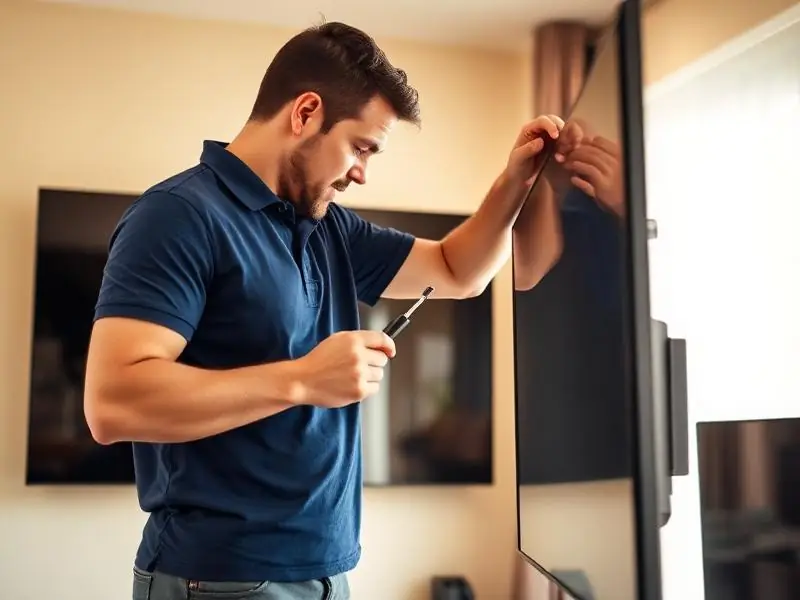
When a TV stops working, the first question is usually: is it worth repairing? The honest answer depends on what has failed, how old the TV is, and what a replacement of similar size and features would cost. Here is how we help customers decide.
Faults that are usually worth repairing
- Backlight failure (sound but no picture) – the most common fault, and usually economical to repair.
- Power supply board faults – often repairable at component level.
- HDMI port, remote sensor, speakers – small, inexpensive repairs.
- Software problems – boot loops, slow Smart TVs and app issues are often fixed without parts.
- Loose ribbon cables causing lines – a quick fix in many cases.
Faults where replacement may make more sense
- Cracked or broken panel – the panel is the most expensive part of a TV. For smaller and budget TVs, a new TV is often better value.
- Panel bonding faults across a large part of the screen.
- Very old models where parts are no longer available.
- Multiple major faults at once, for example a failed main board and a damaged panel.
A simple way to decide
Ask the technician for three things: what exactly failed, the full repair cost including parts, and the warranty on the repair. Then compare that cost with the price of a new TV of the same size. A useful rule many customers follow:
- If the repair costs less than about a third of a comparable new TV, and the TV is under 6–7 years old, repairing is usually worth it.
- If the repair is close to half the price of a new TV, consider replacing, especially for older or smaller sets.
Also consider what you value: a larger screen size you are happy with, wall-mount setup already done, or features that cheaper new TVs do not have are good reasons to repair.
How we handle it
Our technicians inspect first, explain the fault and quote before starting. If a repair is not worth it, we say so. You decide after you have the facts – there is no pressure to repair. Book a technician to get a clear diagnosis.
Questions to ask any TV technician
- What exactly is the fault, and how did you confirm it?
- What is the total cost, including parts and visit charges?
- Is the part new, refurbished or repaired at component level?
- What warranty do you give on this repair, and does it cover the part and the labour?
- Can I see the old part that was replaced?
A genuine technician answers these clearly before starting work. Be careful if someone asks for full payment before diagnosis, refuses to explain the fault, or insists that every problem needs a new panel.
How long TV parts typically last
There is no fixed lifespan, but in our experience backlight strips and power boards are the parts that wear out first, usually after several years of daily use – sooner in hot rooms or areas with frequent power fluctuations. Panels and main boards tend to last longer when the TV is kept cool and protected from voltage spikes. Read our tips on protecting your TV from voltage fluctuation and humidity.
Please do not open the television yourself. Power boards can hold a charge even when unplugged, so internal checks should be left to a trained technician.